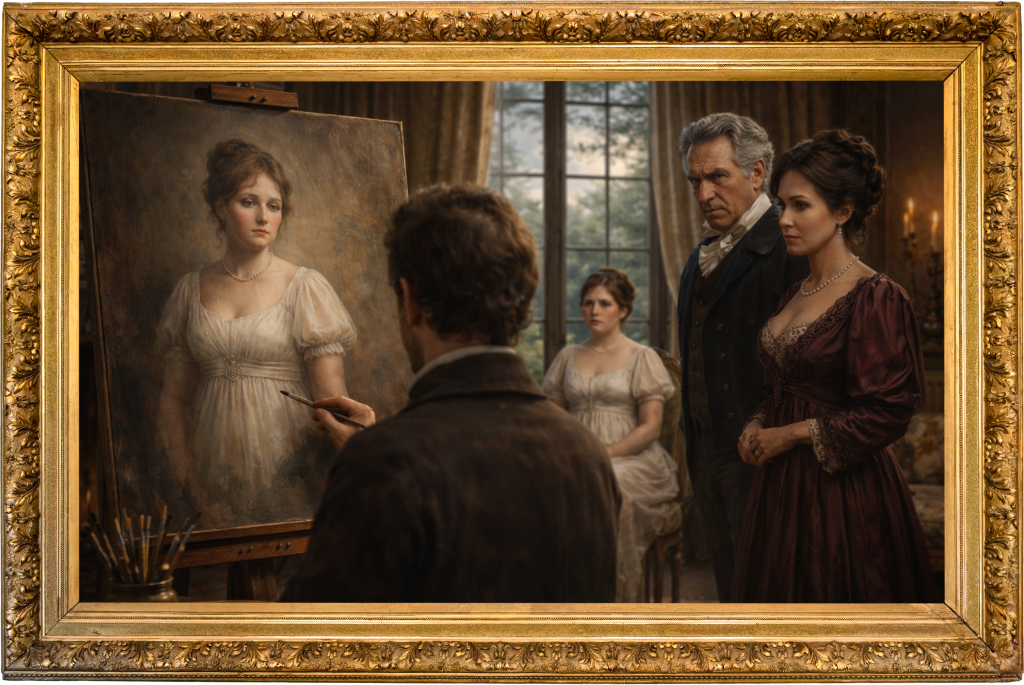
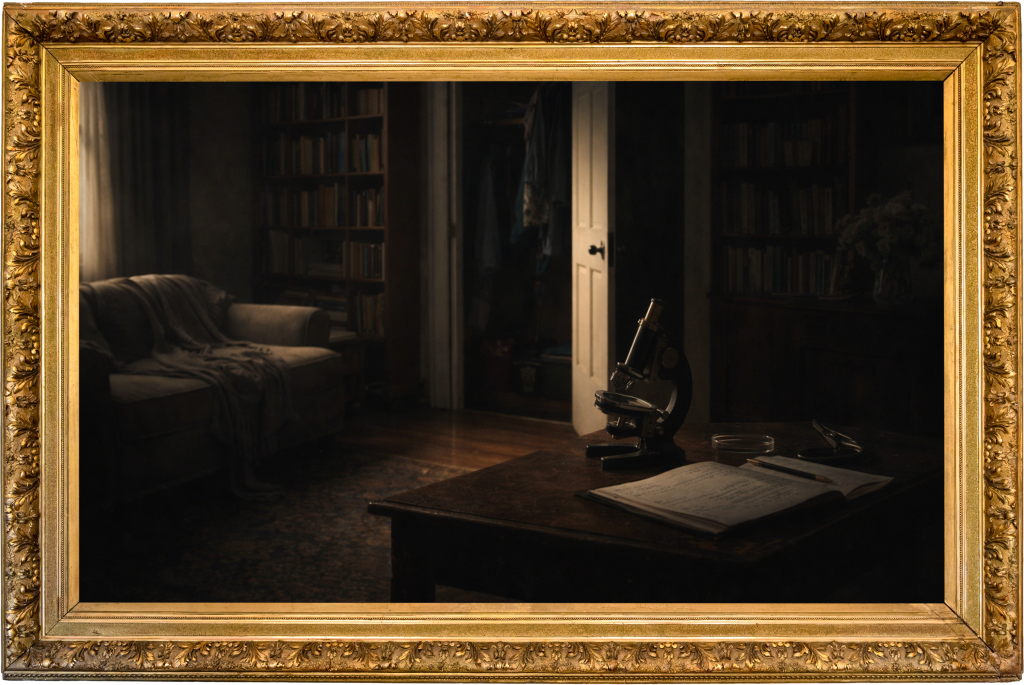
A recently widowed woman devotes herself to creating a perfect apartment so exquisitely controlled that ordinary life begins to feel intolerable. As beauty becomes doctrine, her world narrows from curation to confinement.

First published: 
2026

Published in

“Her Apartment” traces a woman whose aesthetic sensitivity, sharpened by grief and privilege, gradually hardens into a private regime of perfection. What begins as a discerning passion for interiors becomes a psychological architecture: rooms tuned to harmony, objects selected with ritual intensity, and social life filtered through standards so exacting that people, places, and even bodies begin to register as visual offense. Shreve builds the story through tonal contrasts between refined surfaces and destabilizing undercurrents: financial avoidance, dependency on paid caretakers, fear of disorder, and mounting estrangement from family. Notes about staffing, money, and inheritance anxiety give the piece a social edge, showing that “taste” is never purely aesthetic, it is entangled with class, control, and mortality. As the protagonist retreats from the world, the apartment shifts from sanctuary to sealed system. The story’s power lies in this reversal: beauty first protects her, then isolates her, until even ordinary contact feels unbearable. Shreve’s treatment is satirical, tragic, and unsettlingly precise, a portrait of how cultivated sensibility can become a form of spiritual claustrophobia.

Reading Notes

What gives “Her Apartment” its force is its refusal to treat taste as harmless refinement. Shreve builds pressure through accumulation: corrected placements, controlled rituals, social filtering, aesthetic judgments, and the steady conversion of preference into law. The story understands that domination can arrive as curation before it is recognized as control.

The prose is anchored in material detail, stone, fabric, polish, light, thresholds, and silence, and those details do structural work. The apartment is not decorative backdrop. It becomes a behavioral system where elegance and anxiety coexist, and where visual order intensifies emotional disorder rather than concealing it.

A central thematic engine is contested authority: who defines what is acceptable, what counts as “civilized,” and how quickly intimacy is reorganized around one person’s standards. Objects function as social instruments here. Furniture, art, and even empty space become evidence of belonging or exclusion, exposing how aesthetics can be weaponized without ever raising a voice.

Shreve is particularly strong in social micro-scenes, brief exchanges with guests, staff, and intimates that quietly redistribute power. A paused sentence, a minor correction, a withheld invitation can carry more force than open conflict. That restraint gives the narrative its tensile strength and keeps the emotional register exact rather than theatrical.

The ending works because it resists melodramatic collapse. What arrives is not spectacle but recognition: the sanctuary has become a sealed system. In that sense, the title deepens, the apartment as aspiration, as armor, and finally as enclosure. The story’s lasting power comes from this complexity: it lets beauty and coercion occupy the same room without forcing easy verdict.

Purchase Messages Never Sent today!

Now Available: Messages Never Sent, Georgia’s debut poetry book, at select Manhattan bookstores and on Kindle.

Explore more

Short Stories

by Georgia

VIEW FEATURED WORK

Explore more works by Georgia

VIEW FEATURED WORK

Inspired by Georgia’s Work?

 If her creativity moved you, let her know! Click below to send a message of appreciation directly to Georgia.