What gives “Homing” its force is the way it treats error as condition, not failure. Shreve does not imagine a straight path from perception to truth. Instead, she stages a sequence of partial misreadings: light deceives the eyes, eyes mislead the heart, and the heart in turn confuses the soul. The poem’s emotional intelligence lies in this chain of imperfection. It acknowledges that the faculties we rely on are unstable, while still insisting that navigation remains possible.
Formally, repetition is the poem’s engine. “For all the tricks” returns like a refrain, each reappearance widening the stakes. First optical, then emotional, then existential. This escalating structure gives the poem momentum and coherence while keeping diction simple and accessible. The recurring syntax also mirrors lived experience: we confront variations of the same problem again and again, each time at a deeper register.
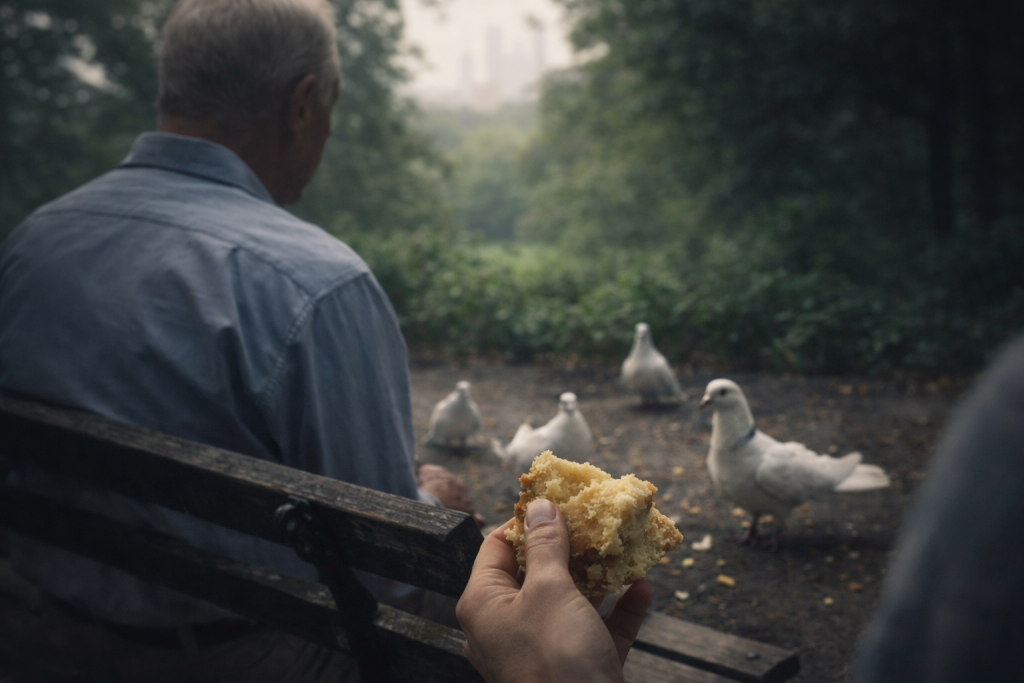
The poem’s central metaphor shifts from intellect to instinct. Early on, “inner headlight” suggests a guiding mechanism that is practical and forward-facing. By the close, that guidance is reimagined as animal knowing, “the inscrutable genius / Of a pigeon or cat.” This is a crucial turn. Homecoming is not presented as analytical triumph but as embodied intelligence, something older than argument and more durable than certainty.
Spatial imagery sharpens this reading. “Dry holes,” “blind alleys,” “locked gardens,” and “cul-de-sacs” map a landscape of obstruction and false arrival. These are not abstract obstacles. They evoke real psychic culverts where momentum stalls. Yet the poem refuses to end in enclosure. The adverb “somehow” in the final line is doing subtle but profound work: it concedes mystery while preserving outcome. The speaker cannot fully explain the mechanism of return, only attest to it.
In that sense, “Homing” is less a poem about destination than about orientation under pressure. Shreve’s voice stays calm, almost conversational, even while describing repeated derailment. The restraint makes the closing assurance more convincing. The poem’s lasting gift is its compact philosophy: being misled is inevitable, but losing one’s way is not final. Something within us, tested and often confounded, remains oriented toward home.