What gives “Knowledge” its quiet power is its commitment to the ordinary as a site of precision. This is not a poem chasing spectacle. It is a poem about returning, and returning again, until repetition becomes fluency. From the first lines, the speaker is already in practice: dressing “according to the month,” reading the day before stepping into it. The poem proposes that wisdom is less about discovery than calibration, the ongoing adjustment between body, season, and place.
The repeated “I know” is central to that effect. It does not sound boastful. It sounds earned. Each recurrence gathers another layer of acquaintance: where sunlight will strike, how bare branches change temperature, when yellow light is ending, what winter does to streams and roads. The poem turns perception into a form of memory-in-action. To know, here, is not to catalog facts. It is to feel the world arriving before it arrives.
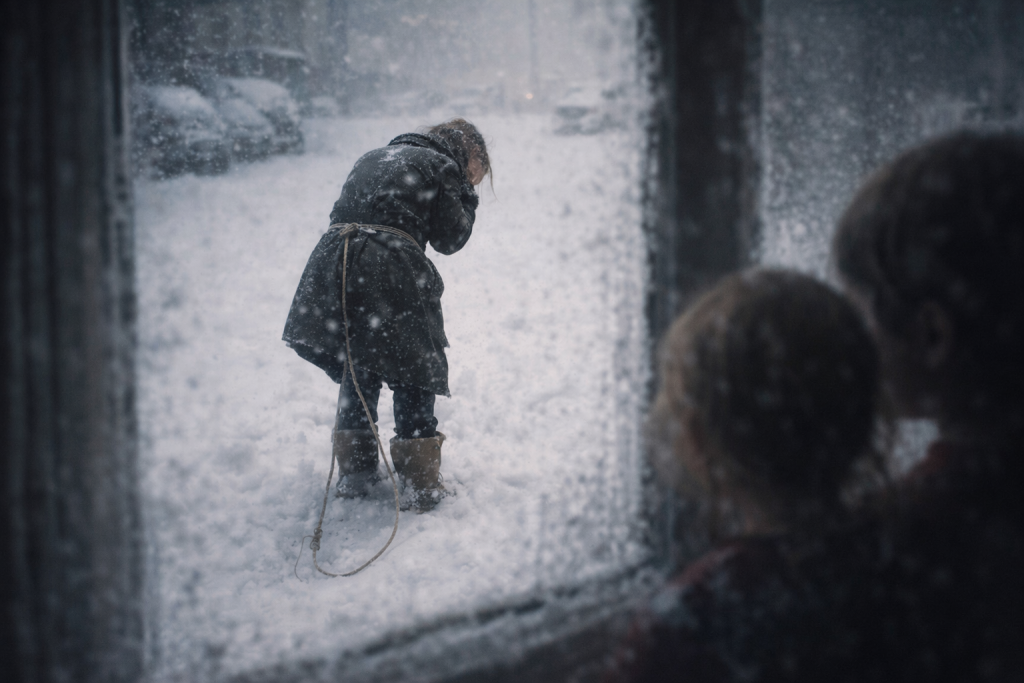
Shreve’s imagery keeps the poem tactile and exact. Shadows shift from “thin as dishwater” to “dense as tree trunks.” Snowdrifts are “white enough for hospitals, / Or dirty enough for rags.” These comparisons are striking because they refuse prettified nature language. Winter is not only beautiful; it is clinical, messy, breathing and struggling. Even the stream is personified as congested and wheezing, an image that collapses landscape and body into one shared vulnerability. The environment is alive, but not sentimentalized.
Midway, the poem introduces physical limits with understated grace: “When I’m feeling strong, / I make it as far as the waterfall. / When I’m tired, counting every step, / I turn back at the yellow barn.” This is one of the poem’s most humane gestures. The route stays the same, but the self changes day by day. Knowledge, then, includes self-knowledge, pacing, and permission. The speaker does not force the heroic version of the walk. She reads her own weather with the same attentiveness she gives the sky.
The ending makes the poem’s argument explicit without becoming didactic. “Some choose a different walk each day… / I prefer the steady and the known.” In another poem, that line might read as defensive. Here, it reads as chosen philosophy. The final phrase, “the lasting knowledge of the eye and ear, / Soothing as a song replayed,” reframes repetition as nourishment. Familiarity is not stagnation. It is resonance. The known path becomes a score, and each walk a performance within it, slightly different, deeply felt, and sustaining.