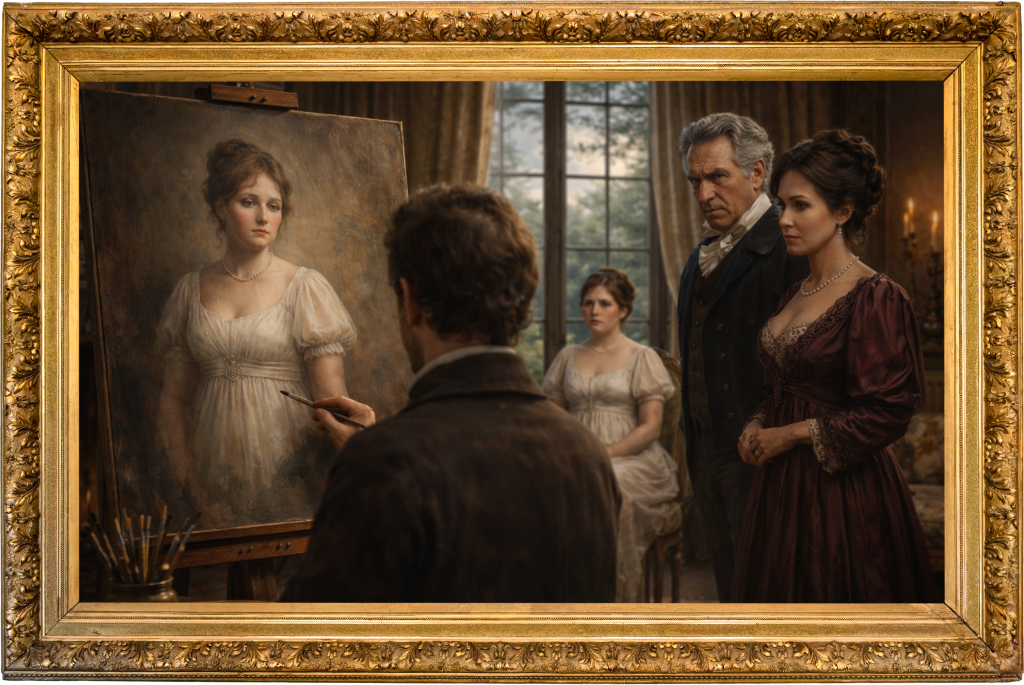
Money is built as a social musical with satirical bite and emotional aftershock. Adapting Bulwer-Lytton’s 1840 play, Shreve keeps the architecture of drawing-room comedy, reversals, reputation games, strategic courtship, and uses it to expose a system in which nearly everything has a price except the things that matter most. The central tension is clear from the outset: characters speak in the language of honor and romance while behaving inside an economy of advantage.
What gives the adaptation strength is tonal control. The writing preserves wit and velocity, but refuses to let wit become insulation. Comic sparkle repeatedly gives way to moral pressure. Scenes that begin as social choreography gradually reveal the private arithmetic underneath: who is desired, who is useful, who is credible, who is expendable. In this way, satire is not merely style. It is method.
Musically, the piece benefits from contrast between public and private registers. Ensemble writing can carry polish, tempo, and performative consensus, the sound of society agreeing with itself, while solo or smaller moments puncture that surface and expose fear, longing, or compromise. This interplay lets the score do dramatic work beyond ornament: music tracks the gap between what characters project and what they cannot safely say.
A key thematic engine is valuation itself. The work treats value as unstable and contested, social, romantic, ethical, financial all pressing against one another. Shreve’s adaptation is especially effective when it shows how quickly language can become transactional: admiration as leverage, generosity as positioning, propriety as camouflage. Even tenderness is tested against class performance and economic precarity.
The result is a period adaptation that does not stay period. Though rooted in nineteenth-century satire, Money resonates with contemporary cultures of branding, optics, and aspirational self-invention. It asks audiences to recognize familiar behaviors in unfamiliar clothes, and to sit with the discomfort of that recognition.
In performance, the work thrives on pace, precision, and intelligence of tone. Played too broadly, it risks costume comedy. Played with clarity and edge, it becomes what Shreve intends: a glittering social machine that reveals, scene by scene, the emotional and moral cost of living in a world where price is legible and value is not.