The Lives of a Woman is built as a dramatic song cycle with theatrical muscle. The score-text relationship is not decorative. The songs are the narrative engine. From the opening ensemble thesis, “cycles go round,” the piece announces its governing idea: womanhood as recurrence, reinvention, and inheritance rather than a single arc of self-actualization. The writing then moves scene by scene through domestic space, memory space, and psychic space, using recurring lyrical motifs to stitch time periods into one emotional fabric.
Structured in eight movements, the cycle traces Margaret’s emotional and existential passage with clear musical architecture:
I. A Child in the Morning of Time
II. The Wind
III. The Life of My Dreams
IV. Becoming a Woman
V. New Eyes
VI. November Dreams
VII. Slipping Away
VIII. Last Wishes
What gives the work its depth is tonal mobility. It pivots from intimate family tenderness to existential clarity without feeling like a genre shift. Early movements frame youth as imaginative expansion and fragility at once; later movements turn toward aging, mortality, and legacy, with Last Wishes stripping ceremony down to elemental human requests. The cyclical design makes the ending resonate as culmination rather than closure.
The scoring is central to that effect. Written for full orchestra and winds, the palette is both cinematic and emotionally precise: woodwinds and horns carry warmth, memory, and ache; strings can either sustain long emotional lines or cut through texture with striking immediacy. Shreve’s signature harp writing adds a distinctive pulse throughout, at times fluttering, at times heartbeat-like, at times gently whimsical, giving the cycle an undercurrent of motion even in still moments.
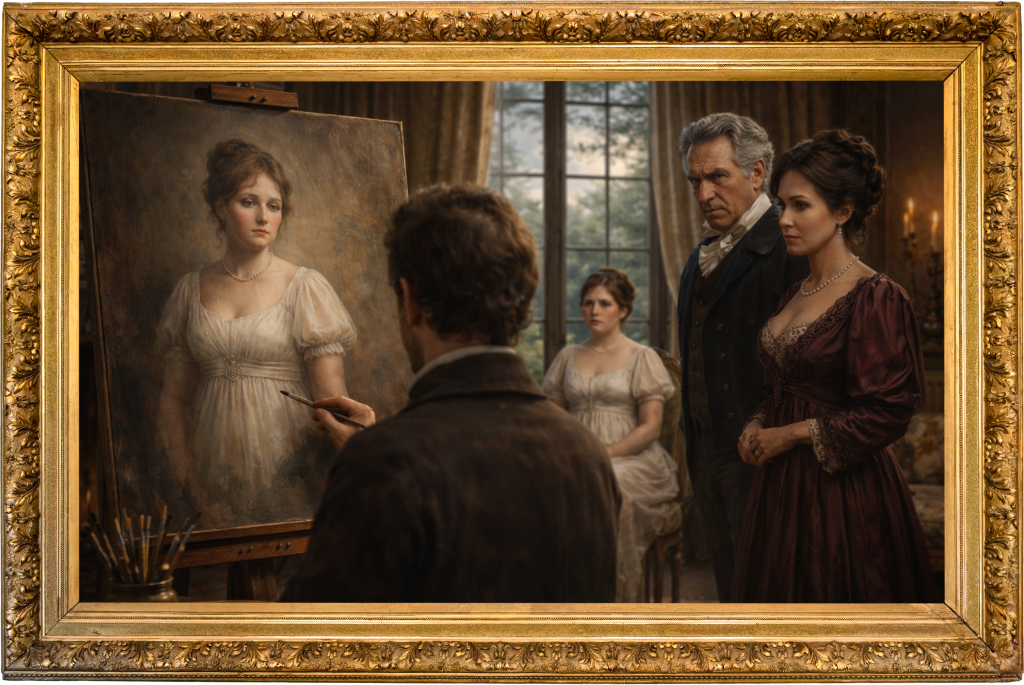
Dramaturgically, Shreve’s use of doubling, with multiple roles carried by the same performers, turns identity into theme. The same bodies recur in altered social and emotional positions, reinforcing the work’s cyclical thesis while giving productions practical casting elasticity. The setting, a rural home in “the past,” grounds the piece in a recognizable emotional geography while allowing music and text to travel across decades of feeling.
In performance terms, this is a work that rewards clear vocal storytelling and crisp transitions more than scenic excess. Its power lies in the cumulative echo between songs, spoken exchanges, and reprise logic. Read as a whole, The Lives of a Woman offers a portrait of growth, care, and impermanence that feels both intimate and archetypal.