Wyndham Lewis, The Enemy is built as a high-intensity monologue in which Lewis reclaims authorship of his own narrative. The dramatic engine is rhetorical rather than plot-driven: a torrent of argument, memory, irony, and self-curation. From the opening movement, the play declares its method, exuberant language, fractured syntax, and deliberate overstatement, then uses that style to interrogate who gets to define an artist’s life.
The historical scaffolding is carefully embedded in the text and research frame: Lewis as a founder of Vorticism, a figure entangled with Pound, Eliot, and Joyce, and a participant-observer of twentieth-century upheaval. These references are not decorative. They place the speaker inside a volatile modernist network while exposing the cost of becoming both canonized and caricatured.
The play’s central theme is contested authorship. Lewis is both witness and unreliable narrator, trying to outrun simplification while generating new simplifications of his own. That paradox gives the piece its tension and theatrical electricity. The title concept “The Enemy” operates as stance and mask: opposition as identity, dissent as method, and provocation as survival strategy in a culture that rewards legibility over complexity.
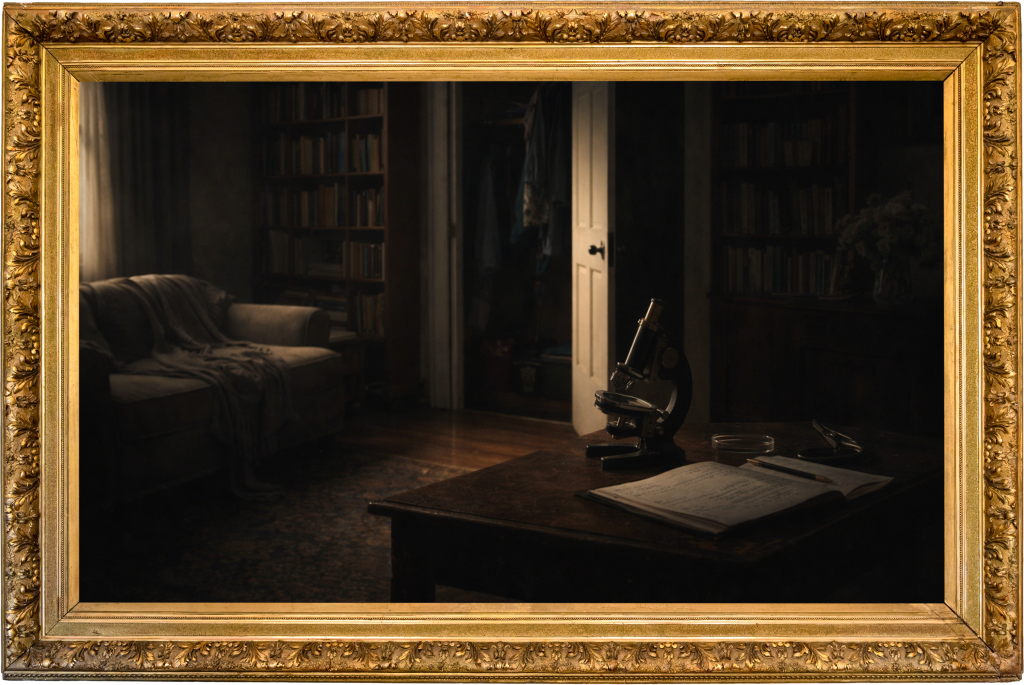
Onstage, the work benefits from a restrained production language: one study, one body, one voice under pressure. It invites precision from performer and director, especially in tonal pivots between wit, self-defense, vanity, and genuine vulnerability. In this frame, Shreve’s play becomes both portrait and x-ray, of Lewis, of modernism, and of the uneasy bargain between art and persona.